


Climate Change Adaptation
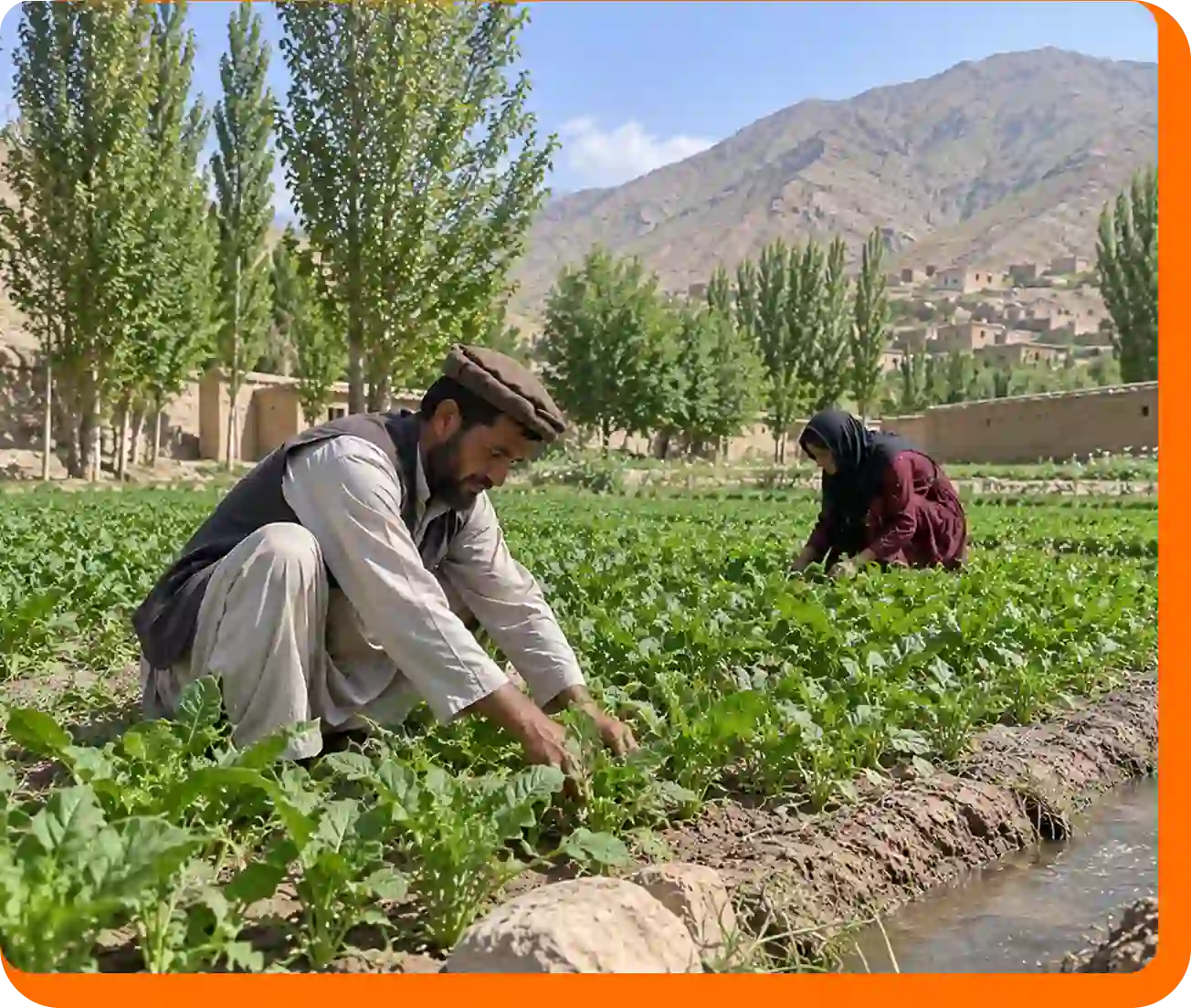
Supporting communities to adopt climate-smart practices that reduce vulnerability to droughts, floods, and extreme weather.


Afghanistan is one of the countries most vulnerable to climate change. Recurrent droughts, flash floods, rising temperatures, land degradation, and shrinking water resources threaten food security, livelihoods, and the safety of millions of people, especially rural families who depend on agriculture and livestock.
At AAIWO, we work alongside vulnerable communities to strengthen their ability to anticipate, withstand, and recover from climate shocks, while promoting the sustainable use and protection of natural resources so that today’s solutions continue to benefit future generations.
From farms to forests, our programmes help communities adapt to climate risks, protect their environment, and build a greener future.
Supporting communities to adopt climate-smart practices that reduce vulnerability to droughts, floods, and extreme weather.
Community-based early warning, preparedness planning, and small-scale mitigation works such as flood protection walls and check dams.
Rehabilitation of karezes, canals, and irrigation systems, rainwater harvesting, and efficient, equitable water use.
Drought-tolerant seeds, improved farming techniques, and sustainable livestock and rangeland management.
Tree planting, watershed protection, and soil conservation to restore degraded land and prevent erosion.
Promoting solar energy and fuel-efficient stoves to reduce deforestation, emissions, and household energy costs.
Diversifying income sources and supporting green livelihoods so families can better withstand climate shocks.
Solid waste management, pollution reduction, and conservation of natural ecosystems at community level.
Climate and environmental awareness in communities and schools, and training for local committees and leaders.
Working with authorities, UN agencies, and partners to align climate action and scale up sustainable solutions.
AAIWO integrates climate resilience and environmental sustainability across all of its programmes, including food security, WASH, health, and education. Communities lead the identification of their own climate risks and priorities, and we combine local knowledge with proven, nature-based solutions such as watershed management, reforestation, and efficient water use to deliver results that are practical and long-lasting.
Our interventions prioritize women, children, persons with disabilities, and displaced families, who are often hit hardest by climate shocks. We follow a do-no-harm approach to the environment and coordinate closely with local authorities, UN agencies, and partners to strengthen local capacity and ensure sustainable climate action across Afghanistan.
Communities map local hazards, vulnerabilities, and priorities.
Action plans are co-designed with communities, local authorities, and partners.
Nature-based and climate-smart interventions are delivered using local knowledge and labour.
Results are tracked and lessons shared to improve and scale up what works.


Climate change is already reshaping daily life in Afghanistan. Droughts destroy harvests, floods wash away homes and fields, and degraded land and scarce water push families deeper into poverty and displacement. Building resilience protects lives, safeguards livelihoods, and prevents hard-won development gains from being lost to the next disaster.
Together with our partners, communities, and donors, AAIWO is committed to helping communities adapt to a changing climate, restore and protect their natural environment, and build a safer, greener, and more sustainable future for generations to come.
Early warning and preparedness reduce loss and harm when disasters strike.
Climate-smart farming and water management keep families productive.
Restored land, water, and forests sustain the next generation.

Join us in building climate resilience and protecting the environment for vulnerable communities across Afghanistan.


